Islamic Family Legacy: Beyond Dunya and Into Jannah
Bismillah…
We speak often of success, purpose, and impact.
But very rarely do we speak of family,
not as responsibility or culture,
but as legacy.
Legacy is usually imagined as achievement,
audience,
or reputation.
But legacy in the Islamic worldview
is quieter,
deeper,
and far more enduring.
Legacy is not performance.
Legacy is continuity.
It is what remains when relevance expires,
when names stop traveling,
when the body tires,
when dunya withdraws.
Modernity teaches us how to make impact,
but not how to make lineage.
It teaches us how to accelerate,
but not how to remain.
It teaches us how to scale,
but not how to belong.
It teaches us how to acquire,
but not how to transmit,
transmit meaning,
transmit values,
transmit remembrance,
transmit responsibility.
The Meaning of Islamic Family Legacy
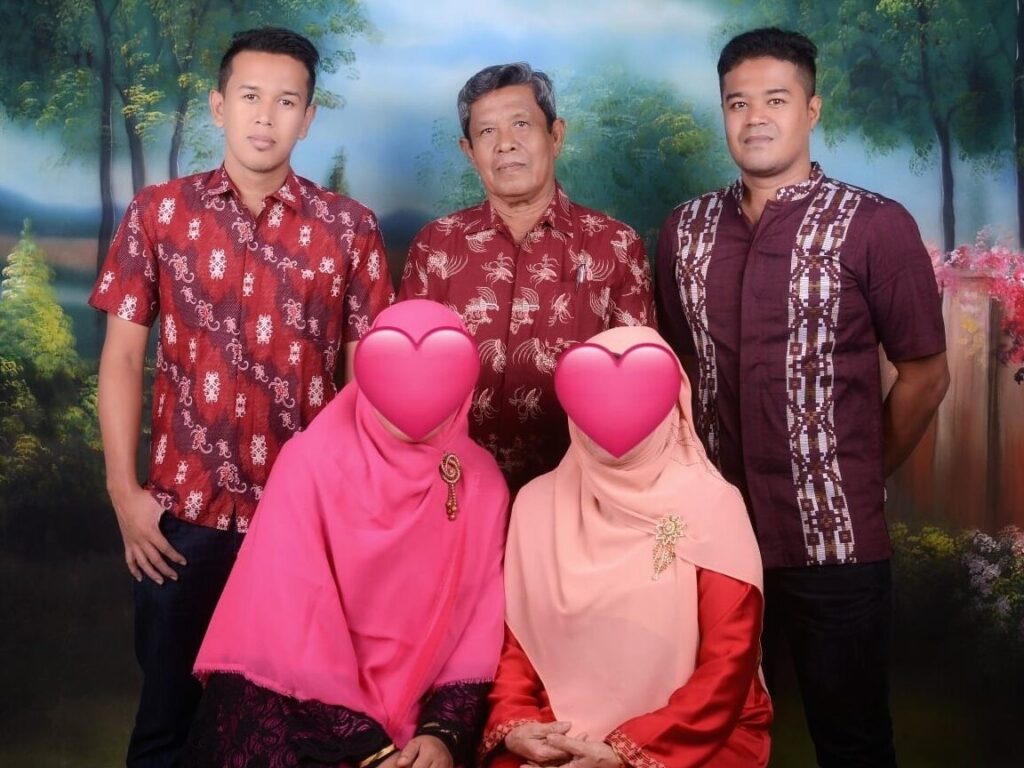
Family is the vessel through which legacy travels across time.
Not through photographs,
not through inheritance,
not through credentials,
but through dua,
through character,
through memory,
through patience,
through love,
through prayers whispered in the unseen.
But to understand family as legacy,
we must begin with the beginning.
Because everything begins with love.
SECTION I. Love as the Foundation of Islamic Family Legacy
Love today is often performed.
Displayed, narrated, curated, documented.
Yet it rarely settles.
Because performance is not belonging.
And belonging is not spectacle.
In a family, love is rarely theatrical.
It is rarely cinematic.
It is rarely efficient.
It is often quiet,
sometimes silent,
sometimes costly,
sometimes mundane,
sometimes inconvenient.
But it is continuity.
Many enter adulthood believing that love must prove itself:
through intensity,
passion,
compatibility,
aesthetics.
But family reveals a different truth:
real love is witnessed over time,
not consumed in moments.
A mother wakes before dawn to pray,
then wakes her children for school.
No applause.
No audience.
Only love as amanah.
A father holds silence instead of argument.
Not out of passivity,
but out of mercy.
Because love values continuation
more than victory.
A sibling covers the fault of another,
preserving dignity instead of exposing it.
Love protects honor,
not ego.
A grandparent whispers dua for their descendants,
even when memory fades
and joints stiffen.
This is love as continuity.
We often speak of love as emotion,
but Islam speaks of love as witnessing.
To love
is to witness someone’s life,
their struggle,
their recovery,
their growth,
their faith.
And to be loved
is to be witnessed back.
For the unmarried, love often feels delayed,
something that will arrive after stability,
achievement,
or healing.
But postponing family until we feel complete
has a flaw:
the self is never finished.
There will always be something to fix,
something to pursue,
something to prove,
something to perfect.
If we wait to be complete before entering family,
we will wait until we are gone.
Because family does not require perfection.
It cultivates it.
Family does not demand readiness.
It shapes it.
Family does not require maturity.
It matures us.
Family is not the reward of being prepared.
It is the school in which preparation happens.
And finally,
family is where life begins,
and where love does not end,
because reunion does not stop at dunya.
The truest form of love
is love that wants to meet again in Jannah.
SECTION II. Time and Continuity in Islam Family Life
Family fractures more because of time
than because of love.
People rarely stop loving their family,
but they often stop spending time with them.
Time is the most expensive currency in family
because it can only be spent,
never returned.
In modern society, time is optimized for productivity,
responding faster,
performing better,
scaling bigger.
But family does not grow in optimization.
Family grows in repetition.
Shared prayer.
Shared errands.
Shared silence.
Shared meals.
Shared burdens.
Shared laughter.
Children remember moments,
not achievements.
Parents remember sacrifices,
not convenience.
Grandparents remember dua,
not performance.
Time inside family is unstructured,
inefficient,
non-productive,
yet deeply formative.
People say they work for their family,
but many rarely spend time with them.
And over the years,
a strange irony emerges:
We feed the family with provision,
while starving it of presence.
Provision sustains life,
but time sustains love.
The Qur’an does not warn us of money,
nor of ambition,
nor of responsibility.
It warns us of time:
By Time, indeed humanity is in loss
(QS. Al-‘Asr: 1–2)
Loss here is not only spiritual.
It is relational.
Homes can be full of people
yet empty of time.
Children can grow with both parents
yet without belonging.
Spouses can share a home
yet not share a life.
Aging parents can be alive
yet already feel gone.
Time is where family becomes real.
Time is where legacy begins.
SECTION III. Legacy in Islam: Raising Righteous Children
When we speak of legacy,
we often imagine something grand,
a name,
a contribution,
a public achievement.
But legacy, in its truest form,
is rarely loud,
rarely immediate,
rarely visible.
Legacy is continuity.
It is what continues when attention moves on,
when relevance expires,
when the world forgets,
when the hands that built it
can no longer carry it.
Modern culture measures legacy by memory,
Will people remember me?
Islam measures legacy by transmission,
Who carries what I carried?
Some families pass down wealth,
others pass down wounds,
some pass down silence,
others pass down dua.
A legacy of money may sustain life,
but a legacy of dua sustains afterlife.
A legacy of success may give advantage,
but a legacy of character gives direction.
A legacy of education may open doors,
but a legacy of faith opens Jannah.
Legacy is not built for an audience.
It is built for descendants.
Legacy is not measured in admiration,
but in continuation.
Legacy is not validated by visibility,
but by prayer.
One of the quiet miracles of our Deen
is how deeply legacy is tied to family.
The Prophet ﷺ reduced legacy to three things:
ṣadaqah jāriyah (ongoing charity)
beneficial knowledge
a righteous child who prays for them
Two are universal.
One is familial.
And of the three,
only one travels intergenerationally.
A project may expire,
knowledge may be forgotten,
but a child who stands in prayer
and whispers your name to Allah
extends your story beyond the grave.
This is why Islam gives family
the role of continuation.
Dunya rewards innovation.
Akhirah rewards transmission.
Family becomes the bridge.
Legacy for the Unmarried
For those who remain unmarried longer,
modernity tells them their story is paused,
incomplete,
or delayed.
But Islam never positioned marriage
as the beginning of one’s worth.
Legacy is not only built through children.
It is also built through:
— who you pray for
— who you support
— who you teach
— who you guide
— who you make dua for in secret
— who you help become better before Allah
Some people become mothers in the flesh.
Others become mothers in the heart.
Both are forms of legacy
when oriented toward Allah.
And Allah completes stories
in ways dunya cannot predict.
Nothing is lost with Him.
Legacy for Parents
Parents rarely realize
that children inherit more than behavior.
They inherit worldview.
They inherit how we speak of Allah,
how we face hardship,
how we treat time,
how we seek provision,
how we forgive,
how we love.
Children become inheritors of interpretation.
And interpretation often outlives memory.
This is why legacy matters.
Because it shapes not only the future,
but the afterlife.
SECTION IV. The Islamic Home as Sanctuary
If legacy is continuity,
home is sanctuary.
Home is not aesthetics,
floor plans,
places,
or possessions.
Home is the place
where values become embodied
before they become taught.
We learn tawakkul
not because someone explained it,
but because we saw someone live it.
We learn sabr
not because we heard a khutbah,
but because we watched someone endure
without bitterness.
We learn mercy
not from definitions,
but from restraint.
We learn generosity
not from speeches,
but from sharing.
We learn to love Allah
not because someone said “you must,”
but because we saw someone love Him.
Homes transmit Islam
long before schools do.
Schools teach information.
Homes teach orientation.
Information fills the mind.
Orientation shapes the soul.
Modern homes, however,
are often full of noise
and low on presence.
Screens replace conversations.
Performance replaces intimacy.
Efficiency replaces attention.
Comfort replaces care.
We live together
but do not witness each other.
We eat together
but do not speak.
We rest together
but do not connect.
We pray alone,
scroll together,
and age in the same house
without sharing life.
Children grow,
but belonging does not.
A home that lacks presence
cannot form legacy.
Because presence is what allows love
to become memory,
and memory to become dua.
Home for the Single
For the unmarried,
home can often feel transitional,
a place you occupy,
not a place that holds you.
But Islam gives even this
a sacred frame.
The Prophet ﷺ taught
that solitude is not emptiness.
It is clarity.
A single person can build sanctuary
long before building family.
And some sanctuaries built in solitude
later become sanctuaries for many.
Home as Sanctuary
A sanctuary home is not a perfect home.
It is a home
where people are allowed to be imperfect
without being abandoned.
Where safety is emotional,
not just physical.
Where faith is familiar,
not forced.
Where dua is natural,
not awkward.
Where conflict is resolved,
not stored.
Where silence is restful,
not punitive.
Where attention is given,
not demanded.
Where honor is protected,
not negotiated.
Islam gives the home
a status of sacredness,
And Allah made for you from your homes a place of rest
(QS. An-Nahl: 80)
Rest here is not merely physical.
It is spiritual.
Because dunya exhausts the soul
long before it exhausts the body.
Home is where the soul
returns to breathe.
SECTION V. Body as the Witness
We cannot speak of family
without speaking of the body.
The body is the witness
through which family unfolds.
We hug our parents with bodies.
We carry children with bodies.
We sit beside the sick with bodies.
We bury the dead with bodies.
We perform salah with bodies,
weep with bodies,
fast with bodies,
and walk toward Jumu’ah with bodies.
The body is not decoration.
It is amanah.
In modern culture, the body is treated as a project,
to beautify,
optimize,
adjust,
sculpt,
and perfect.
But in Islam, the body is treated as a witness,
to prostrate,
to serve,
to heal,
to forgive,
to endure.
Families often neglect the body
not through vanity,
but through sacrifice.
Mothers carry more
than their frames can bear.
Fathers age
before their years.
Grandparents shrink
into fragility.
Children grow faster
than the heart can register.
Time leaves signatures on the body,
stretch marks,
wrinkles,
scars,
stiffness,
gray hair.
These marks are not flaws.
They are evidence.
Evidence of service.
Evidence of love.
Evidence of hardship.
Evidence of continuation.
A body that has loved
will not remain unmarked.
A body that has carried family
will not remain untouched.
When the Qur’an speaks of resurrection,
it reminds us
that the body will testify:
On that Day, their tongues, hands, and feet
will testify against them
(QS. An-Nur: 24)
Testimony requires witness.
Witness requires proximity.
Proximity requires family.
The final act the body performs for family
is burial.
We lower our parents into the earth.
We close the grave with our hands.
We whisper dua through tears.
And we leave knowing
there will be a reunion
for those who believed.
The body ends in dunya,
but family does not.
SECTION VI. Family Reunion in Jannah
Everything we build in dunya
ends in dunya.
But what we build for family
continues beyond it.
Islam does not restrict family
to this world.
It extends it.
Marriage is not merely companionship.
It is partnership for reunion.
Children are not merely responsibility.
They are continuation.
Parents are not merely caregivers.
They are origin.
Dua is not merely asking.
It is extension.
In dunya, families gather at a table.
In Jannah, families gather in completion.
Allah describes this explicitly:
Enter Jannah, you and your spouses, in happiness
(QS. Az-Zukhruf: 70)
Reunion is not metaphor.
It is promise.
The Qur’an continues:
They will be served with fruits and meat of their choice
(QS. Az-Zukhruf: 73)
And therein they will have whatever their souls desire
and whatever delights their eyes
(QS. Az-Zukhruf: 71)
This is not merely pleasure.
It is belonging.
The afterlife reframes family,
not as social structure,
but as timeless companionship.
Some families reunite in dunya.
Others reunite in barzakh.
The best reunite in Jannah.
This is why forgiveness matters.
This is why patience matters.
This is why mercy matters.
This is why dua matters.
Family is not about winning arguments in dunya.
It is about not losing each other in akhirah.
When we are young,
we build identity.
When we mature,
we build life.
When we age,
we build legacy.
When we die,
others continue it.
Family is where all of these converge.
It is where love becomes memory,
memory becomes dua,
dua becomes continuity,
and continuity becomes reunion.
We spend our lives chasing success,
yet forget the people
who witness it.
A CEO will one day need someone
to take them to the masjid.
A scholar will one day need someone
to recite Qur’an beside them.
An entrepreneur, achiever will one day need someone
to whisper,
“We will meet again, in sha Allah.”
Family is where life begins,
and where love never end.
What begins in dunya
does not have to finish in dunya.
May Allah make our families
not only a source of comfort in this world,
but a means of reunion in Jannah.
Aamiin ya Rabbal Alamiin…