
The Prophet Sulaiman Prayer, and A Ramadan Reflection for Leaders Who Build Empires – But Long to Preserve Their Souls
There are eleven months in a year when you build your kingdom.
You build companies.
You build systems.
You build influence.
You build revenue.
You build teams.
You build expectations.
You build empires – some visible in markets, others written quietly into legacy.
Your calendar fills.
Your name circulates.
Your decisions ripple outward into lives you may never fully see.
Responsibility becomes your atmosphere.
You are the problem-solver.
The stabilizer.
The one others lean on.
And then there is one month when Allah builds you.
Ramadan is not a slowdown.
It is an unveiling.
It exposes attachment.
It reveals dependency.
It clarifies what you truly rely on when your usual instruments of control are gently suspended.
Because beneath leadership lies fear.
Some leaders fear irrelevance.
Some fear decline.
Some fear losing momentum.
Some fear being surpassed.
Few fear misalignment with their Lord.
Yet misalignment is the quiet fracture that precedes visible collapse.
Ramadan does not accuse.
It does not shame.
It does not humiliate.
It simply asks:
Who governs your heart while you govern your world?
If there is one figure who embodied both extraordinary power and extraordinary surrender,
it is Prophet Sulaiman (عليه السلام).
He ruled over men.
He commanded jinn.
The wind moved by his order.
Creation responded to him.
His authority crossed the boundaries of the visible and the unseen.
And yet, his heart never bowed to his throne.
That distinction is everything.
Power is common.
Preserved power is rare.
Dominion is impressive.
Dominion without intoxication is exceptional.
That is the Sulaiman Code
I. The Order That Protects Authority
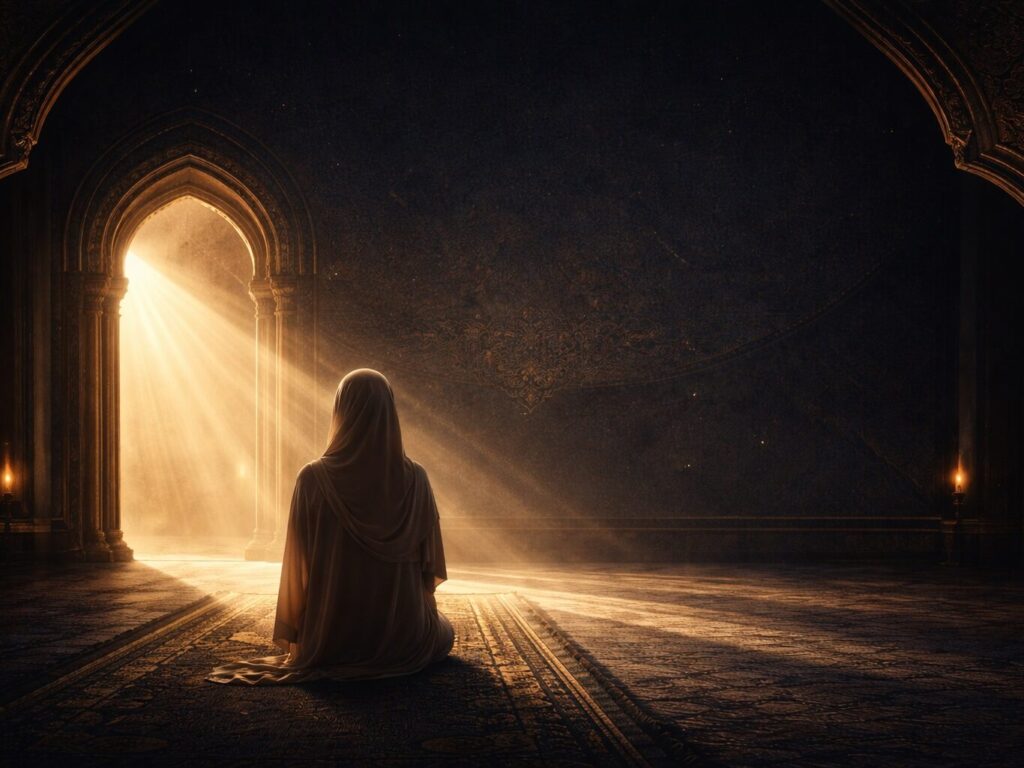
In Surah Sad (38:35), Sulaiman makes a prayer that reveals the architecture of his leadership:
“Rabbi ighfir li wa hab li mulkan la yanbaghi li ahadin min ba‘di, innaka Anta al-Wahhab.”
“My Lord, forgive me and grant me a kingdom that will not belong to anyone after me. Indeed, You are the Ever-Giving.”
The order is not accidental.
Forgive me.
Then grant me.
He begins with purification before expansion.
With humility before dominion.
With repentance before uniqueness.
In a culture that glorifies scaling before self-examination, this order is revolutionary.
Authority without inner cleansing does not collapse publicly first.
It erodes privately.
The erosion is subtle.
It begins with small shifts in intention.
With entitlement replacing gratitude.
With visibility replacing sincerity.
With self-reference replacing divine reference.
Ramadan restores the correct sequence.
Fasting disrupts illusion.
You cannot eat when you wish.
You cannot drink when you wish.
You cannot indulge when you wish.
Control becomes conditional.
And in that condition, the ego is gently weakened.
Hunger is not merely physical deprivation.
It is psychological reorientation.
It teaches the leader who commands others that he does not command himself absolutely.
Sulaiman commanded wind, but he never mistook wind for ownership.
The modern leader commands teams, capital, attention, digital reach.
But without purification, these become extensions of ego rather than instruments of service.
Sulaiman understood something most leaders learn too late:
Power is safest in the hands of the self that has been softened.
II. Dominion as Amanah, Not Ownership
The Qur’an repeatedly frames power as granted – never possessed.
Even when Sulaiman speaks of what he has been given, the language reflects entrustment.
There is a theological distinction between ownership and amanah (trust).
Ownership implies permanence.
Trust implies accountability.
Ownership says: This is mine.
Trust says: This has been placed with me.
The difference reshapes leadership psychology.
When you believe you own influence, you fear losing it.
When you understand it as amanah, you fear misusing it.
Ramadan shifts the axis from possession to trust.
Your body is a trust.
Your time is a trust.
Your wealth is a trust.
Your platform is a trust.
The fast trains you in relinquishment.
Each sunset teaches you that what you withhold, you do not control absolutely.
Each night prayer teaches you that what elevates you is unseen.
Sulaiman did not say, “I built a kingdom unmatched.”
He said, “Grant me.”
That phrasing dismantles ego-centered narratives of self-creation.
Modern leadership culture romanticizes the self-made myth.
Islamic leadership dismantles it.
There is effort.
There is discipline.
There is strategy.
But there is no self-sufficiency.
And this recognition relieves a burden many leaders silently carry:
The burden of believing they must hold everything together.
When Allah is recognized as Al-Wahhab – The Ever-Giving –
effort continues,
but anxiety loosens.
Responsibility remains,
but panic diminishes.
Because what is entrusted can be returned without identity collapsing.
III. Forgiveness as Expansion
Laylatul Qadr sits at the summit of Ramadan.
It is described in Surah Al-Qadr as “better than a thousand months.”
One night surpassing a lifetime.
Yet the du‘a taught by the Prophet ﷺ for that night centers on forgiveness:
“Allahumma innaka ‘afuwwun tuhibbul ‘afwa fa’fu ‘anni.”
Forgive me.
The repetition is not accidental.
Forgiveness precedes elevation.
In spiritual psychology, unrepented ego compresses perception.
It narrows vision.
It distorts motives.
It justifies excess.
When Allah forgives, He does more than excuse.
He expands.
Al-‘Afuww clears interior debris.
Al-Wahhab fills the cleared space.
This is why Laylatul Qadr is abundance – not merely of reward, but of expansion.
A heart lightened by forgiveness can carry weight without cracking.
A leader purified through repentance can scale without fragmentation.
Sulaiman’s prayer and Laylatul Qadr’s du‘a mirror each other:
“Ighfir li.”
“Fa’fu ‘anni.”
Purification is not a prelude to power.
It is the protection of power.
IV. The Inner Kingdom and the Architecture of the Self
Sulaiman’s outer kingdom was unmatched.
But what preserved him was not external magnitude, it was internal order.
The outer kingdom is visible:
Revenue.
Influence.
Position.
Recognition.
The inner kingdom is invisible:
Intention.
Sincerity.
Humility.
Dependence on Allah.
Modern founders understand systems architecture.
Few map the architecture of the self.
Ramadan becomes the annual audit of the invisible.
Because inner erosion is silent.
You can grow reach while losing stillness.
You can expand revenue while shrinking gratitude.
You can build empires while neglecting the soul that must carry them.
Sulaiman ruled wind.
But he had already ruled his ego.
External authority without internal governance is unstable.
Internal governance without external recognition is still whole.
Ramadan recenters the axis.
If the outer kingdom slowed tomorrow,
would the inner kingdom remain intact?
V. The King Who Heard an Ant
In Surah An-Naml, the Qur’an recounts a scene that appears almost gentle in contrast to Sulaiman’s vast dominion.
An ant speaks.
And Sulaiman hears.
A king pauses because of a creature smaller than a fingertip, and he smiles.
The detail is not ornamental. It is revelatory.
Power often magnifies ego.
In Sulaiman’s case, power magnified perception.
The higher he rose,
the more attentive he became.
There is a psychological truth embedded in this narrative.
When authority increases, sensitivity often decreases.
Leaders become insulated by hierarchy.
Filtered by layers.
Shielded from small signals.
Minor concerns are dismissed.
Subtle warnings are ignored.
Fragile voices are unheard.
But Sulaiman heard an ant.
He did not override it.
He did not dismiss it.
He adjusted.
This is preserved authority.
Ramadan restores attentiveness.
Hunger sharpens awareness.
Silence deepens listening.
Reduced indulgence refines perception.
When appetite quiets, insight expands.
The ant represents more than a creature.
It represents what we overlook when distracted by magnitude.
The fragile.
The quiet.
The early warning.
Leaders who cannot hear small signals eventually face large consequences.
Markets shift subtly before they crash.
Teams fracture quietly before they resign.
Hearts harden invisibly before they detach.
Sulaiman’s sensitivity was not weakness.
It was stewardship.
And stewardship requires listening before reacting.
Ramadan retrains leaders in this art.
To hear again.
To slow again.
To notice again.
Because sometimes preservation lies not in expansion, but in attention.
VI. The Day Authority Fell Silent
In Surah Saba (34:14), Sulaiman dies leaning on his staff.
Still upright.
Still appearing strong.
But already returned to his Lord.
The jinn continue working.
They do not know.
Control was never absolute.
Authority can persist without you.
Systems continue.
Titles fade faster than we assume.
Ramadan prepares the heart for this inevitability –
not with fear, but with sobriety.
Each sunset ends your fast.
Each night ends your strength.
Each dawn resets your dependency.
The rhythm of Ramadan rehearses impermanence gently.
Human beings equate continuity with control.
As long as revenue flows,
recognition remains,
influence expands –
we assume permanence.
But permanence belongs only to Allah.
When a leader internalizes impermanence, something shifts.
Clinging softens.
Stewardship deepens.
Ego loosens.
Alignment survives interruption.
VII. Leadership Fatigue in the Age of Visibility
Modern leadership is not only demanding.
It is exposed.
Constant communication.
Constant expectation.
Constant performance.
Visibility creates amplification, but also pressure.
There are leaders who command rooms
but cannot sit alone in quiet.
There are founders who close significant deals
but struggle to close their eyes in peace.
There are mothers who hold entire households together
while neglecting their own spiritual replenishment.
Exposure inflates the external self.
Ramadan restores the internal one.
Fasting is private.
Sincerity is unseen.
Night prayer is hidden.
No applause accompanies sujud at 3 a.m.
No metrics track tears shed in solitude.
This concealment is medicine.
Because visibility without worship destabilizes.
Intellect without humility inflates.
Influence without remembrance corrodes quietly.
Strategy without sujud eventually fragments the soul that must carry it.
Sulaiman was visible beyond measure.
Yet the most powerful moment recorded about him in Surah Sad is not his throne.
It is his prayer.
“Forgive me.”
That vulnerability preserved him.
Ramadan offers leaders refuge from performance.
Not to abandon impact,
but to purify its source.
Because the most dangerous leadership is not arrogant leadership.
It is fatigued leadership that no longer knows how to return inward.
Ramadan teaches the return
VIII. The Psychology of Control and the Illusion of Permanence
There is a subtle addiction embedded in leadership: control.
Control over time.
Control over narrative.
Control over outcomes.
Yet control is always partial.
Sulaiman commanded wind, but only by Allah’s permission.
He governed jinn, but not beyond divine allowance.
The Qur’an frames his dominion as extraordinary, yet bounded.
Modern leadership culture romanticizes autonomy.
Islamic leadership contextualizes it.
There is effort, but not independence.
There is strategy, but not sovereignty.
Ramadan weakens the illusion of control.
You plan meals, but cannot eat them at will.
You feel thirst, but delay relief.
You experience fatigue, but continue obedience.
The body becomes reminder.
Dependency is not weakness.
It is reality.
Leaders who deny dependency grow rigid.
Leaders who accept dependency grow grounded.
Sulaiman’s strength was not diminished by worship.
It was sustained by it.
This is the Sulaiman Code in its quietest form:
Power is safest in the heart that knows it is not ultimate.
IX. The Sulaiman Ramadan Code
Ramadan does not merely inspire reflection.
It restores order.
From Sulaiman’s prayer, from Laylatul Qadr, from the arc of dominion and surrender, a quiet architecture emerges.
Not a formula for success.
But a discipline for preservation.
The Sulaiman Code in Ramadan can be distilled into seven calibrations:
1. Begin with istighfar before ambition.
Ambition is not condemned in Islam.
Sulaiman himself asked for a kingdom unparalleled.
But he began with repentance.
Istighfar is not weakness.
It is alignment.
Before scaling strategy, purify intention.
Before seeking uniqueness, cleanse ego.
Before asking for expansion, soften the heart.
Leaders who neglect this order often scale faster than their character can sustain.
Ramadan restores the sequence.
Forgive me.
Then grant me.
2. Seek Laylatul Qadr not merely for reward, but for renewal.
Laylatul Qadr is often pursued for multiplied reward.
But the du‘a taught for that night centers on forgiveness.
Renewal precedes multiplication.
A heart cleared of residue can receive weight without cracking.
If Laylatul Qadr becomes only transactional, a night of spiritual gain – its deeper purpose is missed.
It is not only about earning more.
It is about becoming lighter.
And lightness is what allows authority to remain steady under pressure.
3. Let salah interrupt your authority before authority interrupts your soul.
Five daily prayers fragment the illusion of uninterrupted control.
Meetings pause.
Decisions pause.
Momentum pauses.
In sujud, hierarchy collapses.
CEO and employee bow the same way.
Founder and intern stand shoulder to shoulder.
Salah is not disruption.
It is recalibration.
If prayer does not interrupt your authority willingly, authority will eventually interrupt your soul unwillingly.
Ramadan retrains leaders in chosen surrender before forced surrender arrives.
4. Choose sujud over spectacle.
Visibility is intoxicating.
Recognition reinforces identity.
Applause affirms presence.
But spectacle feeds the outer kingdom.
Sujud feeds the inner one.
Sujud is unseen.
Unrecorded.
Unapplauded.
And yet it stabilizes what visibility destabilizes.
Sulaiman’s most powerful moment was not recorded as a display of dominance.
It was recorded as a prayer.
When leaders choose sujud over spectacle, their authority deepens without hardening.
5. Build your inner kingdom with the same seriousness as your outer one.
Most leaders invest heavily in external architecture:
Strategy.
Brand.
Expansion.
Systems.
Few invest with equal seriousness in internal architecture:
Intention.
Gratitude.
Humility.
Dependence.
Yet it is the inner kingdom that determines whether the outer one fractures under pressure.
Ramadan shifts attention inward.
Not to abandon expansion,
but to ensure it rests on stability.
Because empires do not collapse from size.
They collapse from misalignment.
6. Treat your authority as amanah, not possession.
Authority is never ownership.
It is entrusted.
Possession breeds anxiety.
Entrustment breeds accountability.
When you believe authority is yours, you cling to it.
When you recognize it as amanah, you steward it.
Sulaiman did not claim autonomous dominion.
He asked to be granted.
That language protects the heart.
Ramadan reinforces this perspective daily.
Your strength is entrusted.
Your influence is entrusted.
Your time is entrusted.
And what is entrusted can be returned without identity dissolving.
7. Remember impermanence before it reminds you.
Sulaiman died standing.
Outwardly unchanged.
Inwardly returned.
The Qur’an presents this without drama because the lesson is already clear.
Continuity is never guaranteed.
Markets shift.
Relevance fades.
Health declines.
Influence moves on.
Ramadan rehearses endings gently.
Each sunset ends a fast.
Each night closes a day of effort.
Leaders who internalize impermanence lead differently.
They cling less.
They steward more.
They measure legacy not by duration, but by alignment.
Ramadan is not a pause from leadership.
It is a purification of it.
Not a retreat from dominion,
but a restoration of its source.
And when these calibrations settle deeply,
the outer kingdom no longer defines the self.
It reflects it.
X. When Kingdoms Pause
There is a moment in every leader’s life
when expansion slows.
Not because vision has ended.
Not because provision has stopped.
But because Allah is recalibrating the axis.
Ramadan is not a retreat from empire.
It is a reordering of it.
It asks quietly:
If your authority were paused,
would your heart remain steady?
If visibility faded,
would your identity remain intact?
If growth delayed,
would your trust remain anchored?
Sulaiman’s kingdom did not protect him from humility.
His humility protected his kingdom.
Some leaders lose their empires publicly.
Others lose themselves privately long before that.
Ramadan interrupts that silent erosion.
It invites leaders to audit their reliance, their intention, their sincerity.
And sometimes that audit reveals something subtle:
Not failure.
Not weakness.
But fragmentation.
A misalignment between the outer kingdom and the inner one.
And when that realization surfaces,
it is not a sign to build more.
It is a sign to seek clarity.
Because preserved power is not built on momentum.
It is built on alignment.
The Sulaiman Code was never about dominion alone.
It was about knowing Who grants it.
Remembering Who can withdraw it.
And ensuring that when kingdoms pause,
the heart still knows its King.